Quality
Hawaiian Harmony Testing and Quality: What the Badges and Codes Really Show
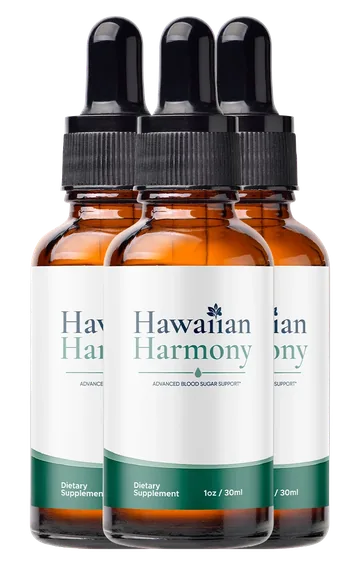
The Hawaiian Harmony label says it was made in an FDA registered facility, but registration is not FDA approval, and the FDA does not approve supplements. The badges name no auditor. The lot (HAW-26/MY-3843) and CoA reference (HAW-3843-26-MY) are seller codes, not lab proof. No independent lab report has been published, so ask for one tied to your lot.
The facts
Is Hawaiian Harmony tested for quality?
We cannot show you a lab test, because none has been published. What exists is a label line about the factory, four brand badges and two seller reference codes.
That is not unusual for supplements, but it is worth saying plainly. The FDA does not approve dietary supplements before they go on sale (FDA, Supplement Q&A). Quality depends on the maker following the rules, and on proof they choose to share.
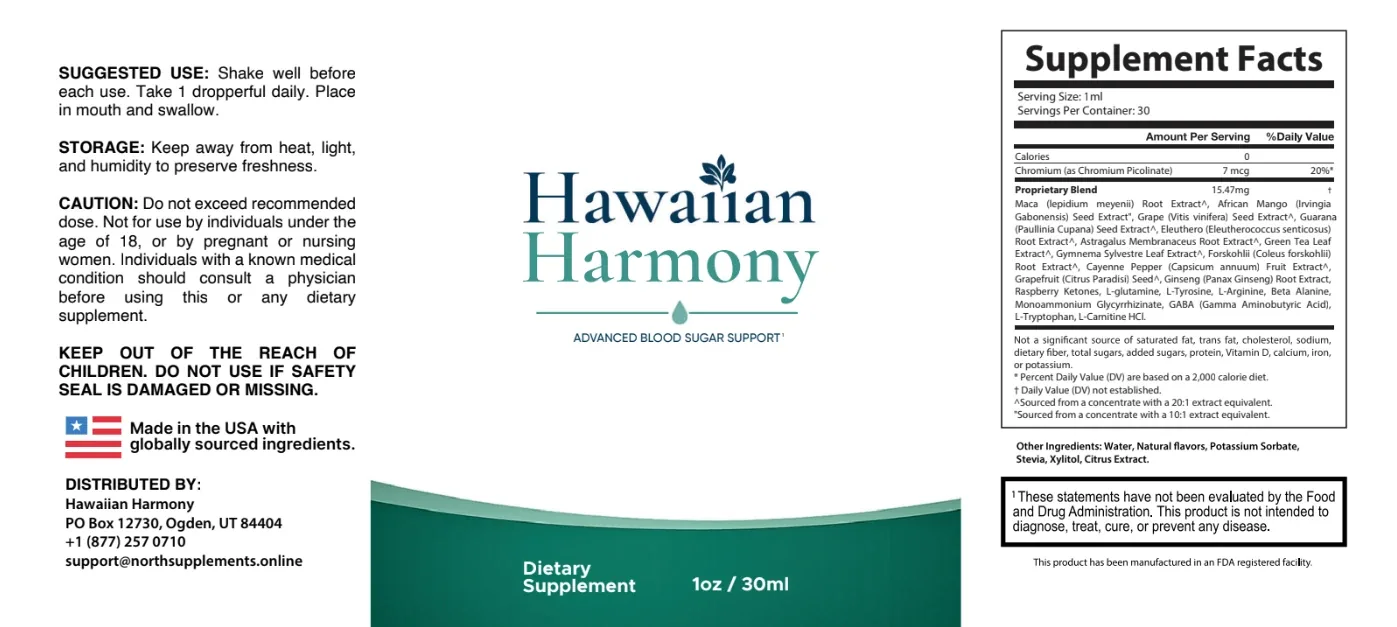
Each piece has a plain meaning and clear limits, set out below. The printed label itself is on the Supplement Facts page.
The badges
What do the Hawaiian Harmony badges mean?
Four badges appear on the brand's images. Each one describes something; none is an independent endorsement.
 Registered facility
The label says it was made in an FDA registered facility. Registration is not FDA approval.
 Good Manufacturing Practice
A brand badge. No certifier or audit report is named.
 Foreign and domestic ingredients
Matches the label line: made in the USA with globally sourced ingredients.
 Money-back guarantee
180 days on the sales page kits. A purchase policy, not a promise of results.
A badge is artwork supplied by the brand. It points to a claim; it is not a certificate. When a badge names no organization, there is nobody outside the company you can check it with.
FDA registration
Does an FDA registered facility mean Hawaiian Harmony is FDA approved?
No. The FDA says plainly that registering a facility does not mean approval, and that it does not approve dietary supplements (FDA, Approval myths).
The label line reads: "This product has been manufactured in an FDA registered facility." Registration means the factory told the FDA it exists and what it makes. It is not a pass mark for this product, and it is not a recent inspection result.
Read the round FDA-style badge as "the factory is on the FDA's list." Do not read it as "the FDA checked these drops." A supplement cannot be FDA approved, so any bottle that claims it is misusing the phrase.
Side by side
What does each Hawaiian Harmony quality signal prove?
Each signal tells you one small thing. None of them, alone or together, is the same as an independent lab result.
| What you see | What it means | What it does not prove |
|---|---|---|
| "FDA registered facility" | The factory is registered with the FDA | FDA approval, or a test of this product |
| GMP badge | The brand says it follows good manufacturing practice | An audit; no certifier is named |
| Foreign and domestic ingredients | Made in the USA from ingredients sourced worldwide | Where each ingredient came from |
| Money-back seal | A 180-day refund policy | Quality or results |
| Lot HAW-26/MY-3843 | A seller reference for a batch | Any lab result |
| CoA reference HAW-3843-26-MY | A code the seller links to a certificate | That a certificate exists publicly or what it says |
| Supplement Facts panel | The full formula as the maker states it | That the bottle matches it, or single blend amounts |
The codes
What are the Hawaiian Harmony lot and CoA reference codes?
They are reference codes from the seller: lot HAW-26/MY-3843 and CoA reference HAW-3843-26-MY. They help match an order to a batch, but a code on a web page is not a lab result.
A code only becomes useful when it links to a real document. That document should name a lab, show test results and carry the same lot number printed on your bottle.
- Look at the base of your bottle for the lot and best-before print, when it is shown.
- Compare it with the lot on any report you are sent.
- If they do not match, the report is about a different batch.
The batch verify page covers the matching steps in more detail.
A real report
What would a real certificate of analysis for Hawaiian Harmony show?
A real certificate of analysis (CoA) is a lab report for one batch. It lists what was tested, the target, the result and whether it passed.
| Part of the report | What to look for |
|---|---|
| Lab name and address | A real, named lab you can look up. Ideally accredited to ISO/IEC 17025, the standard for testing labs. |
| Product and lot | "Hawaiian Harmony" and the same lot number printed on your bottle |
| Dates | Date of manufacture, date tested and date issued |
| Identity | Tests showing key plant extracts are what the label says they are |
| Strength | Chromium measured against the label's 7 mcg per 1 ml |
| Heavy metals | Results for lead, arsenic, cadmium and mercury, with limits |
| Microbes | Yeast and mold counts, plus tests for E. coli and Salmonella |
| Pass or fail | A specification next to every result, and a signature from the person who approved it |
A CoA written by the brand itself, with no lab named, tells you much less than one from an outside lab.
One limit
Can a lab check each ingredient amount in Hawaiian Harmony?
Only partly. A lab can measure chromium against the printed 7 mcg, because that amount is on the label.
The 21 blend ingredients have no single amounts printed, which proprietary blend rules allow (FDA, Labeling guide). A report could confirm what is present, but there is no printed target to compare each amount with.
Fair view
Where is Hawaiian Harmony strong on quality, and where are the gaps?
The label is more open than many, and the proof behind it is thinner than we would like. Both are true.
Strengths
- The full Supplement Facts panel is published, blend total included.
- Chromium has a stated amount: 7 mcg, 20% DV.
- Origin lines are printed: made in the USA, globally sourced ingredients.
- Cautions and storage rules are clear and complete.
- Lot and best-before print on the base when shown.
Gaps
- No independent lab report has been published.
- No certifier or audit stands behind the GMP badge.
- Single blend amounts are not printed.
- No trial of the finished product exists.
- Lot and CoA codes are seller references only.
The ingredients page looks at the 22 ingredients and how their amounts compare with research.
Do it yourself
How can you check a Hawaiian Harmony bottle yourself?
Start with the bottle in your hand, then ask for paperwork. It takes a few minutes.
Check the seal
Do not use the bottle if the seal is broken or gone, as the label warns.
Match the label
Compare your label with the published panel: 7 mcg chromium, a 15.47 mg blend, 30 servings.
Find the lot
Look for the lot and best-before print on the base.
Ask for the CoA
Write through the contact page on the official sales site with your order ID and lot number, and ask for the lab report for that lot.
Claims and proof
Why does quality proof matter for a Hawaiian Harmony buyer?
Because a clean batch is the one thing a supplement should be able to prove. The FTC expects health claims to rest on competent and reliable scientific evidence (FTC, Health claims).
A lab report does not prove the product works. It only shows the bottle contains what the label says, without harmful extras. That is a fair thing to ask for before you take something every day.
Questions about orders and paperwork go through the sales contact page. Questions about this website go to the contact page.
FAQ
Hawaiian Harmony quality: common questions
Has the FDA approved Hawaiian Harmony?
No. Supplements do not get FDA approval at all. The label says only that it was made in an FDA registered facility.
Is Hawaiian Harmony third-party tested?
No independent lab report has been published, and the badges name no outside certifier.
What is lot HAW-26/MY-3843?
A seller reference code for a batch. It is not a lab result on its own.
Can I get the certificate of analysis?
You can ask for it through the sales contact page with your order ID and the lot number from your bottle.
Does the GMP badge mean it was inspected?
Not by itself. The badge names no certifier, and no audit report has been shared.
Where is Hawaiian Harmony made?
The label says it is made in the USA with globally sourced ingredients. The factory itself is not named.
Keep reading
More about Hawaiian Harmony
Batch verify
What the lot and CoA codes really are, where to find them on the bottle, and how to check the seal.
Read moreSupplement Facts
The whole Hawaiian Harmony label typed out, with the serving math, blend rules and every caution line.
Read more
Ingredients
All 22 label ingredients in order, grouped by type, with the amounts research actually used.
Read moreU.S. stocking partner for Hawaiian Harmony
Ready to try Hawaiian Harmony with the 180-day guarantee?
Order through the stocking partner's page so your order ID is on file with the refund desk. The 6-bottle pack is $49 a bottle and lasts the full 180-day window at 1 dropperful a day.
On diabetes medicine? Ask your doctor before you start. Order questions go through the contact page on the official sales site. 180-day money-back guarantee, return shipping paid by the buyer.